A Look Inside The Manager Method Book
Feb 05, 2026I love reading leadership books. But no one needs (or wants) to write a book that repeats things they've read before. When I started writing The Manager Method, I wasn’t interested in a theory-only guide, or advice that sounds good but doesn't actually help you lead in real life.
I wrote this book because I know management is hard in very specific, very human ways. I also know there are ways to make it easier. And that's the part managers (from brand-new leaders through experienced senior executives) can use real help with. That’s what this book is for.
The Manager Method is a practical guide for what management actually feels like and what to do in the moments where you’re thinking, Wait… what do I do here? What do I say here?
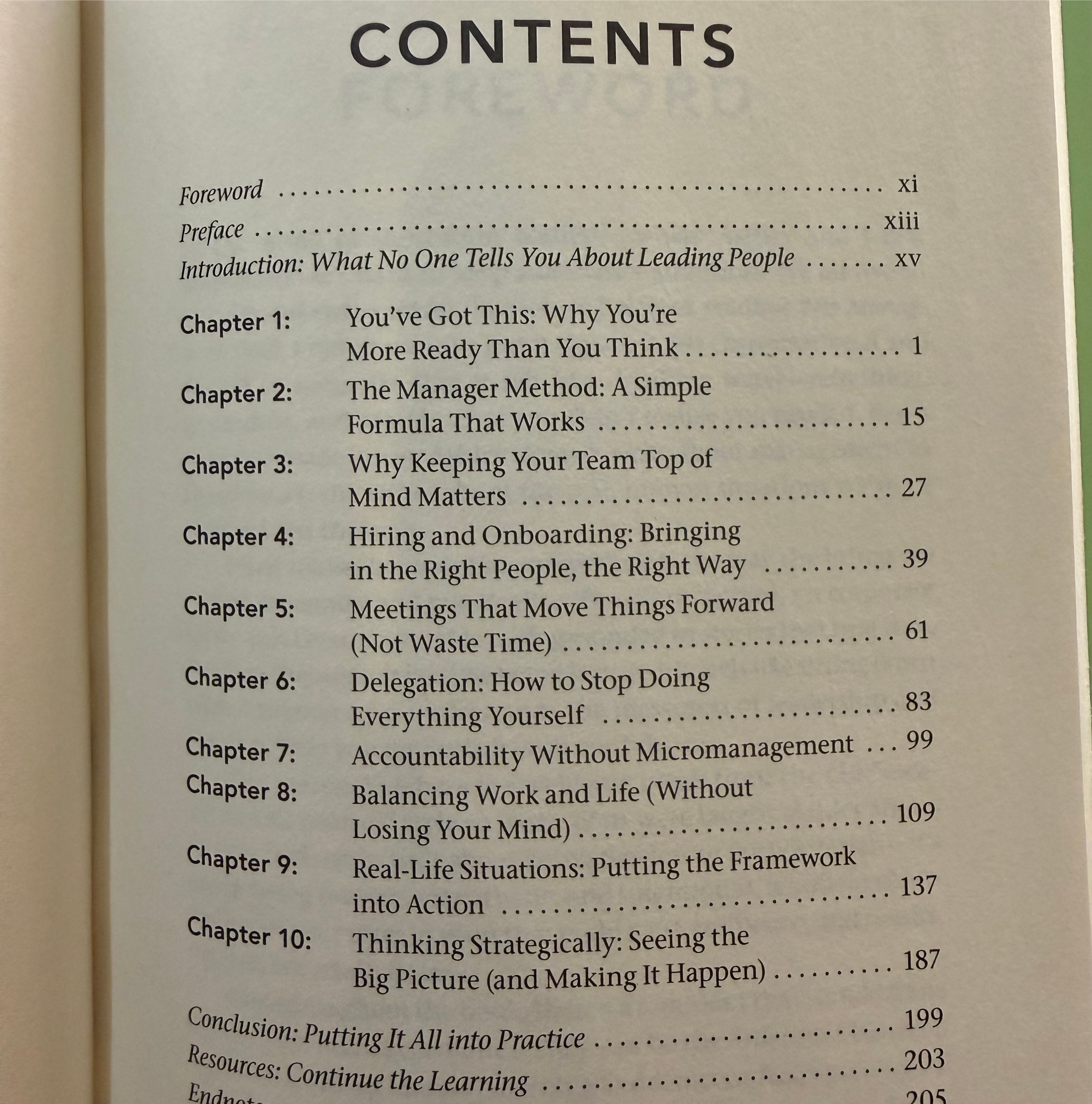
I'm excited for the book to be released on February 10th. And since I tell managers that their teams should know what's expected, I'll do the same for you. In this video and blog, I break down each chapter. You'll get a deeper look at how the book is structured, why I wrote each chapter, and how it can help you navigate real life at work.
Introduction: What No One Tells You About Leading People
I start the book by recognizing the part of management most people aren’t warned about: the emotional weight of the role.
Managing people isn’t just about "things" (like tasks and deadlines). It’s about absorbing frustration, navigating personalities, making decisions that affect real lives and, all too often, replaying conversations in your head long after the workday ends.
I wrote this section to normalize that experience. If you’ve ever thought, Why does this feel so hard? or Why didn’t anyone warn me about this part? — you’re not doing it wrong. You’re right where most managers are.
This introduction sets the tone for the entire book: you don’t need to be perfect to be effective, and you don’t need to figure this out alone.
Chapter 1: You’ve Got This (Why You're More Ready Than You Think)
This chapter exists because a lot of management decisions (and indecisions) are driven by your own thoughts and worries as a manager.
Imposter syndrome. Overthinking. Second-guessing yourself after every conversation. Feeling like everyone else has a secret playbook you somehow missed.
I wrote this chapter to help managers get grounded before trying to fix everything else. It talks about thinking of "career quilts" instead of "career ladders." And it includes tips like how to avoid being a "tight jeans" manager (and what to be instead), and acknowledging the reality that many people think you're both an octopus and a wizard... when you're neither.
This chapter gives you practical exercises to be more confident, even before you've finished the book.
Chapter 2: The Manager Method — Pause, Consider, Act
This chapter is the backbone of the entire book. Pause, Consider, Act is a simple framework you can use in any situation as a people leader.
I wrote this because most managers don’t need more advice. You need a way to slow down just enough to make better decisions in the moment.
In this chapter, you’ll learn:
- How to pause without avoiding or delaying
- What to actually consider before responding (including one particular person I like to consider)
- How to act in a way that you won't regret later
You’ll see this framework used again and again throughout the book, and how to apply it whether you’re dealing with performance issues, conflict or sensitive conversations.
Chapter 3: Keeping Your Team Top of Mind
This chapter is about empathy, but in a way that actually works at work.
Not corporate speak. Not performative empathy (and I even give an example of a presentation where I changed the name from "Empathy in Action" to something that resonated much more with the managers attending). It's about recognizing that the people on your team are humans with lives outside of work, and that acknowledging and adjusting to that reality usually leads to better results, not lower standards.
This chapter helps managers build trust without overcorrecting or trying to be everyone’s friend. If you’ve ever felt torn between supporting your team and still getting the work done, this chapter gives you language and perspective to do both.
Chapter 4: Hiring and Onboarding — Doing It Right from Day One
I wrote this chapter to help managers avoid regret.
From "regret hires" to "regret moments" (where someone quits the first week on the job), it's how to make shifts in how you interview, hire and how those individuals start.
This chapter focuses on being honest with candidates instead of overselling the role, understanding why onboarding isn't just HR’s job, and setting clear expectations so people are actually set up for success (a phrase that's too often said, without actually being done).
If you’ve ever had someone leave quickly, or seem like a completely different person than the one you interviewed, this chapter helps you spot where things went off track and how to do it better next time.
Chapter 5: Meetings That Actually Move Things Forward
Meetings don’t have to be exhausting, but a lot of them sure are.
This chapter exists because unclear meetings create more work, more confusion, and more follow-up than necessary.
In this chapter, you’ll find guidance on:
- Understanding what kind of meetings can help make everything else easier
- Deciding when a meeting is actually needed and when it isn’t
- Running meetings that make an impact instead of draining energy
- How to use AI to help you do all of these things
If you’ve ever walked out of a meeting thinking, What was the point of that... and what am I supposed to do now? — this chapter is for you.
Chapter 6: Delegation Without Everything Falling Apart
This chapter is for managers who feel like they’re doing everything themselves.
There are a lot of reasons for this, and as I explain in the beginning of the book, even those "tight jeans" managers are often coming from good intentions. But good intentions don't change the reality that it's hard to give up control, when you worry about how someone else will do it, especially when things are busy or the stakes are high.
This chapter covers why delegation feels uncomfortable and how to make it feel like a good thing. It also covers how to delegate without becoming the bottleneck, and how to resist the urge to take work back when it’s not done exactly your way.
The goal isn’t to dump work. It’s to teach, trust and create capacity without creating stress (for you or your team).
Chapter 7: Accountability Without Micromanaging
Is "accountability" a good word for your team? Probably not. But this chapter helps you flip the script.
It gives tips on addressing issues early without becoming the manager that makes everyone nervous. It’s about holding the line without constant monitoring.
This chapter focuses on:
- Giving feedback without triggering defensiveness
- Addressing issues before they escalate
- How to talk through the "how" so your team members aren't just telling you what you want to hear
Chapter 8: Balancing Work and Life Without the Guilt
This chapter is for managers who feel like they never really shut off. I share how I felt this way myself, and what I did to change that. And also how a very famous leader (whose workplace was the opposite of corporate) did the same.
It addresses burnout, boundaries and the pressure many managers feel to always be available.
You’ll learn:
- How your habits shape your team’s ability to rest and recharge
- How to make your time off be off, not "off-ish"
- How to help your team members do all of this, too
This chapter helps managers build a sustainable way of working, for themselves and their teams.
Chapter 9: Real-Life Manager Scenarios
This is where everything comes together.
This chapter includes real situations managers face, paired with both practical tips and short case studies showing how to apply the Pause-Consider-Act framework in the moment.
Scenarios include things like:
- Managing when your team is short-staffed and everyone is stretched thin
- Explaining the same expectation or process for the hundredth time
- Addressing a high performer whose behavior is hurting the team
- Navigating awkward but necessary conversations, like when an employee raises a hygiene concern about a coworker
- Supporting an employee through a personal loss while still maintaining clarity and boundaries
And there are plenty more. Each scenario walks through how to Pause, what to Consider, and how to Act in a way that’s thoughtful, fair and realistic.
This chapter is designed to help managers bridge the gap between knowing what to do and actually doing it when you close the book.
Chapter 10: Thinking Strategically — The Bigger Picture
This chapter helps managers stop reacting and start leading.
It focuses on stepping back, noticing patterns, and making decisions that aren’t just about today’s problem, but about long-term impact.
You’ll learn how to think beyond the immediate issue and prepare for more senior leadership responsibilities, including how to reconsider your time management in doing so.
Conclusion: Putting It All Into Practice
This isn’t a “good luck, hope that helped!” ending.
The conclusion focuses on how to keep using the Manager Method over time and turn it into a habit you can return to again and again.
Because being a good manager isn’t about getting it right once. It’s about having tools you trust when things get hard.
What to Expect from This Book
The Manager Method covers a lot because management is a lot.
It’s for the everyday moments and the uncomfortable ones. The expected issues and the ones no one prepares you for. If you’re looking for real, practical leadership guidance you can actually use, not just read, this book was written for you.
It comes out on Tuesday, February 10th. You can go to the Manager Method Book page to order it, and to access the resources I mention in the book to bring it to life, whether you're reading it for yourself or as a group.
You can see a peek the full TOC below, and on Tuesday, find out who wrote the Foreword and Preface: